

As the weather gets warmer, many of us are spending more time outside. But with more time outdoors comes more bug bites- and ticks are especially bad this year. For older adults, insect bites can be more serious and may lead to stronger reactions, skin infections, or illnesses like Lyme disease. In this post, we’ll share simple ways to prevent bug bites, use insect repellent safely, treat bites at home, and know what to do if you find a tick.
Preventing Bug Bites
- Make sure your limbs are covered- wear long sleeves, long pants, socks, and shoes when spending time outside (you may want to go a step further and tuck your pant legs into your socks in you’re worried about ticks).
- Mosquitos love standing water (water left unattended that’s able to pool). Make sure to get rid of any standing water you find around your home and avoid standing water when outside.
- Avoid being outside during dusk when bugs are most active.
- The AARP recommends wearing blue, green, purple, or white, as these are colors that mosquitos tend to avoid.
- Wear insect repellent and know how to apply it correctly.
Using bug repellent safely
- Look for an EPA approval label and registration number.
- Make sure it contains EPA-approved ingredients (click here for more information).
- Read the directions so you know how to use the product, how much to apply, and when to reapply.
- Avoid sunscreen/bug spray 2-in-1 products.
- Avoid using bug spray on cuts or irritated skin.
- Always use bug spray in open, airy areas.
- Do not apply directly to your face. Instead, spray the repellent into your hands and then apply it carefully to your face.
- Don’t spray near eyes or mouth.
Insect bites & older adults
- Our skin tends to thin as we age, which can make bug bites more irritating.
- Older adults are more likely to have a weakened immune system, which can increase the risk of infection from bug bites (or from scratching bug bites!).
Insect bite first aid
- Is the person allergic to stings from the insect that stung them?
- Ask if they have an epi pen.
- Call 911 and stay with them until help arrives.
- Gently wash the area with soap and water.
- Remove any stingers.
- Apply an ice pack for 10 minutes to reduce swelling.
- Apply an anti-itch cream (e.g., hydrocortisone cream, calamine lotion, etc.) or antihistamine/anti-itch medicine (e.g., Allegra, Claritin, etc.).
- Take an over-the-county pain reliever (e.g., Tylenol, Advil, etc.) if needed.
Info on ticks
- Why are ticks dangerous?
- They often carry diseases like Lyme Disease.
- While not all ticks carry disease, the number of tick-borne disease cases in the US is increasing.
- Because they’re so small and tend to attach to hard-to-see parts of the body, they can be hard to spot and remove.
- Tick stats
- Ticks are active in Michigan from May through August; they tend to be most active in June and July.
- Ticks tend to be found in wooded areas with tall grass and lots of fallen leaves. If you’re outside, make sure to walk in the center of the trails.
- In 2025 there were 237 reported cases of Lyme Disease in Washtenaw County.
- Ticks attach themselves to your body to feed on your blood.
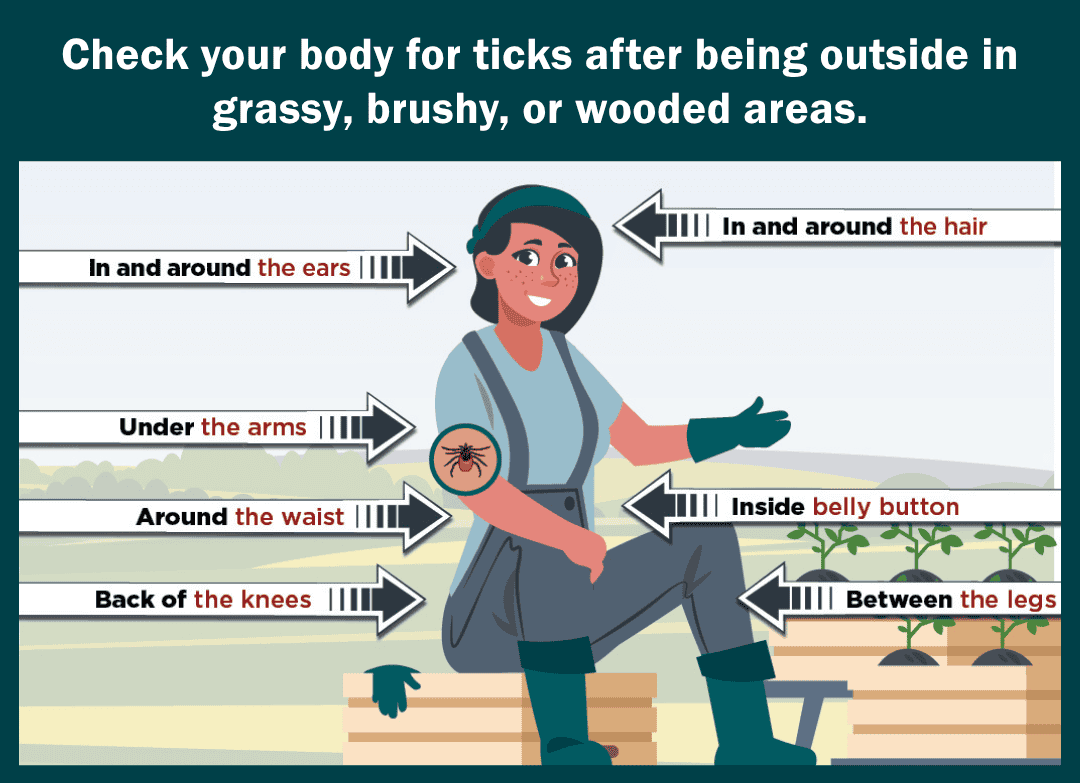
- Make sure to check your body for ticks after coming inside from being outdoors. This can be done with a partner/caregiver or solo using a hand mirror.
- Be sure to also check clothing, shoes, and any bags/gear you had with you outside.
- See the infographic below to learn where ticks tend to attach themselves to the body.
- Taking a shower after being outside can also help remove any loose ticks.
- Tumble drying your clothes on high heat for around 10 minutes can kill any ticks on your clothing.
- Safely removing ticks
- Remove the tick(s) as soon as possible! The longer they’re on your body, the greater the chance that they’ll bite you.
- Use fine-tipped tweezers or regular tweezers to grab the tick as close to your skin as possible. Make sure any instrument you use- whether tweezers or your fingers- are cleaned and disinfected!
- Use slow, steady pressure to pull the tick away from your skin.
- Put the tick in a sealed container, wrap with tape and flush down the toilet, or put the tick in alcohol. Do NOT try and squish the tick with your fingers.
- Clean the area you removed the tick from and make sure to wash your hands thoroughly with soap and water.
- Do another tick check to make sure there are no other ticks on your body.
- Next steps
- Watch the area to see if you develop a rash. If you do, contact your doctor.
- If you’d like your tick identified, email a picture of it to [email protected] (click here for tips on photographic ticks).
- Please note that tick testing isn’t recommended because results can be slow and unreliable.
Stay safe outside this summer!