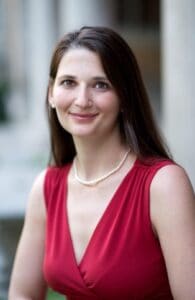
Music has a special way of reaching people, especially during times of stress, illness, or change. For older adults, music can bring comfort, spark memories, and lift mood in ways words sometimes can’t. In this post, we sit down with Rachael Lawrence-Lupton, owner of Gentle Care Music Therapy, to talk about what music therapy is and how it helps seniors and their caregivers. Whether it’s singing, listening, or making music together, music therapy offers a gentle and meaningful way to connect and feel supported.
Senior Resource Connect: If you had to give an “elevator speech” about what your organization does, how would you describe it?
Rachael Lawrence-Lupton: I have the opportunity to provide music therapy to seniors, either in groups or individually in whatever space they call home. If they move to a different place, I will follow them to their new home, and am always happy to have family members join virtually for sessions to watch their loved ones become more authentically themselves. I address a variety of needs for those that I see including life review, intentional socialization, relaxation, and building community as well as easing symptoms for things such as pain, anxiety, depression symptoms, difficulty breathing, and procedural support with other clinicians.
SRC: Walk me through the step-by-step process. What happens when you get a phone call/referral?
RLL: When I get a referral, the first thing I ask is if the need is for a group or an individual session. The next question is about the frequency of requested visits as well as the overall location. For those that are within my service area, I will plan to visit in person. For those that live out of state or are out of my area, I will set up telehealth visits. For an individual session, I will create a contract and email that and other documents to the person interested to fill out prior to an agreed upon first session. One of the documents that is sent is basic background information, including goals of therapy as well as preferred music; this informs what types of music I use in our sessions, as well as specific interventions. From there we start sessions and adjust the frequency as needed to make sure each person/facility’s needs are met. If the request is for a group session within a facility, I work with the facility to complete whatever paperwork is required prior to starting.
SRC: What organizations do you work closely with?
RLL: Currently, I have contracts for group sessions in several facilities/day programs in Washtenaw County (Silver Club, All Seasons, Brecon Village, Brookdale, Brookhaven Manor, and Vibrant Life Senior Living,) but that does not limit me from going into any other facility for individual sessions. I am also partnering with several home care and care management agencies (Cornerstone Caregiving, Care Management by Natalie, and Visiting Angels) as well as organizations that work directly with seniors (Oasis Senior Advisors).
SRC: What are some things you wish the public knew about your role?
RLL: While music is part of what I do, my goal is not to entertain those that I visit with. That may be a component of what I do, and people may perceive that as an outsider looking in, but there is so much that is happening under the surface. I intentionally choose the music to fit someone’s preferences, adapt the tempo of the music to match their processing speed, as well as adjust keys to maximize someone’s engagement. There are also fluctuations in tempo or lyrics that often occur throughout the course of a song in order to achieve specific goals that are set for a patient. In addition, because of the experiences that music therapists had during the pandemic, I am an expert in telehealth and can make someone feel as if I am in the room with them, even if I am unable to be physically present. This allows me to visit with people, not only across the state of Michigan, but also in most states across the country.
SRC: What tips do you have for someone with a loved one who may be looking into music therapy?
RLL: When in doubt, reach out either to me (via email/phone/website), or to a company that you are working with and ask if music therapy is available. Many organizations have either a music therapist on staff or contract with one to be able to provide a session. Even if I am not the right music therapist for you or your loved one, I will be happy to connect you with someone that is able to assist you.
SRC: Is there anything you would like to add?
RLL: One of my passion projects over the last few months has been the creation of 11 guided meditations with specifically tailored music and words. One is specific to caregivers. Other medications include visualizations of a candle and water. They range between 5 and 10 minutes long and are available for purchase on my website either streaming or as a 2 CD set. I recognize that not everyone has time for a 30- or 50-minute session and sometimes what we all need most is to take a few minutes to pause and reset.
I’m looking forward to the opportunity to connect with your readers and bring them the gift of music therapy.
Thank you to Rachael for sharing this community resource! You can learn more about Gentle Care Music Therapy by calling (312) 515-6161 or visiting their website.